A Diagnostic for the Firstborn Daughter Whose Love Language is Acts of Service

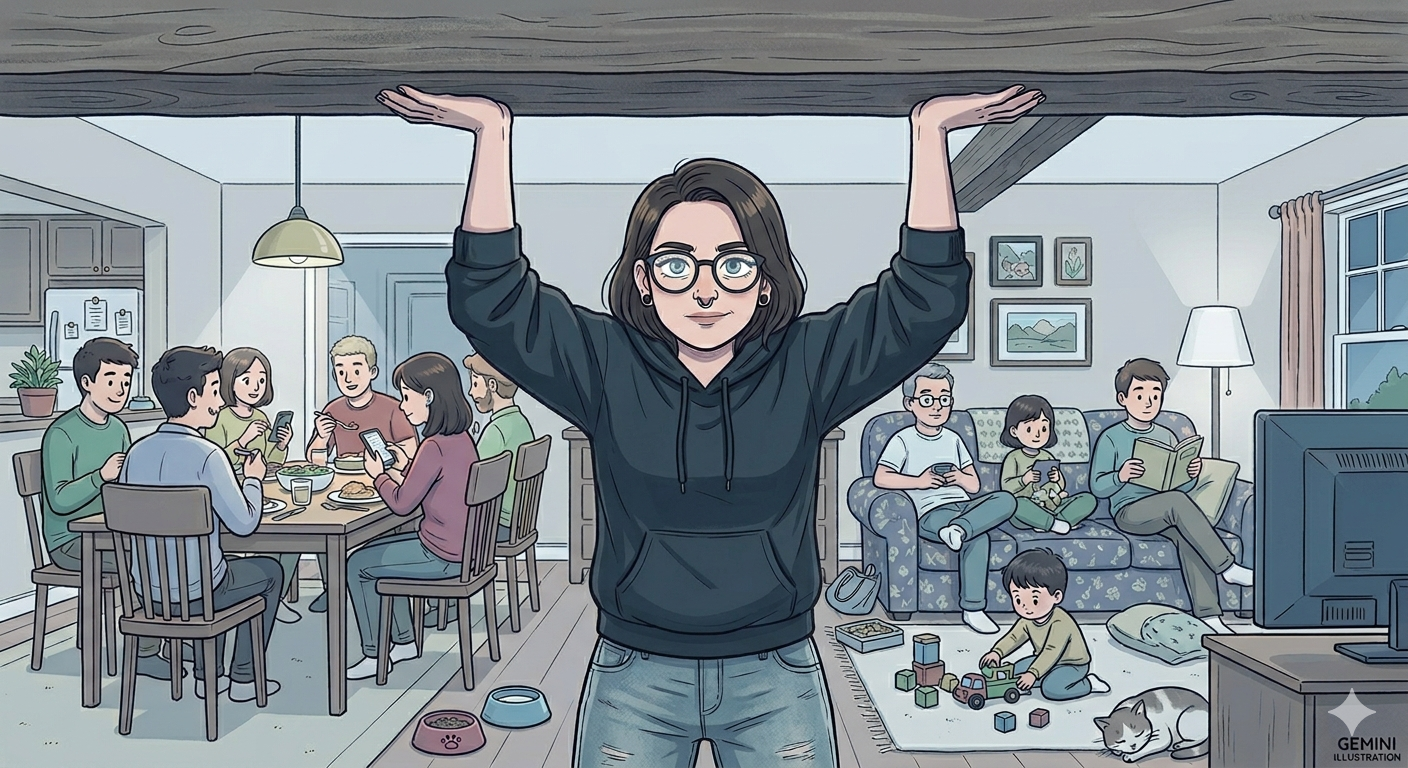
If you're the oldest daughter, you already know. I'm telling you anyway, because being told what you already know is one of the few things that feels like rest to us.
You're tired. You've been tired since you were nine. You don't remember a time when you weren't the one keeping track of things.
Welcome. We have snacks. Someone else brought them and you remembered to thank her.
The diagnosis
Firstborn daughter. You got the strict version of the rules, the inexperienced version of the parents, the unfiltered version of every adult anxiety in the household. You were eight and reminding a grown man about his dentist appointment.
People pleaser. Built directly out of the above. When the adults around you have inconsistent moods, you learn fast that your job is to manage the room. By adulthood it's so reflexive you think it's just who you are. It's not. It's a survival skill that calcified into a personality trait.
Love language: acts of service. Words of affirmation? Suspect. Quality time? Conditionally. Physical touch? Depends. But doing things for people hits different. Loving someone, for us, is a verb. A whole list of verbs, actually, all happening simultaneously, all unprompted.
The result: you are perpetually overextended. Not occasionally. Perpetually. Your idle is everyone else's redline.
How it shows up
You're the one who knows where everyone's stuff is. Sends the reminder text, then the second one, then just does it yourself. Notices someone's quiet at dinner and circles back to them later in private. Can't sit down at a gathering until everyone else is settled. Picks up other people's slack so reflexively you don't even register it as their slack.
You do this at home. You do this at work. You do this in your friendships. You do this for strangers.
The mythology
Self-help culture has a whole genre dedicated to telling us to stop. Set boundaries. Say no. Let things fall apart.
It misses something fundamental, which is that we don't actually want to stop.
We want to be appreciated. We want the labor recognized. We want the people we love to also notice when we're quiet at dinner and circle back to us in private. We want someone to fold our laundry, just once.
But we don't want to stop doing the things. The things are how we love. The things are the language we speak fluently and the only one we trust. You can teach a firstborn daughter to receive. You cannot teach her to stop. She'll forget her own name before she forgets to text you on the day of your big meeting.
Why this is a feature, not a bug
Yes, I'm tired. Yes, I'll probably die with a to-do list. Yes, I should learn to receive better, and I'm working on it slowly, with great resistance, because being received feels worse than being depleted.
But the world needs us. Quietly, desperately, all the time. Every functioning family has one of us in it. Every functioning team has one of us in it. We are the load-bearing beam. We are the reason your event happened. We are the reason your mother got to her cardiologist appointment.
You're welcome.
What I want for us
To keep doing it AND to stop apologizing for being tired about it. To receive without flinching. To find each other and love each other in our own language. The firstborn daughter who folds your laundry while you're crying. The one who shows up with food. The one who texts "what time is your flight" and then "did you make it" and then "I just want to know you're home." That's how we know each other.
If you recognized yourself in any of this: hi. The labor counts. You're allowed to be tired. You're allowed to keep doing it anyway.
You don't have to stop being who you are to be loved correctly. You just have to find the people who notice.